The Pune District Central Co-operative Bank Ltd. (PDCC) was established on 4th September 1917 through the visionary and untiring efforts of the late Shri N.C. Kelkar. Founded as a dedicated Central Financing Agency, the bank emerged from a vital need to create a specialized mechanism for distributing agricultural and rural finance.
From humble beginnings operating with just two employees—a manager, Shri L.K. Bhagwat, and a single clerk—and a modest working capital of ₹51,000, PDCC has grown exponentially. Our foundational membership comprised just 137 pioneers (55 co-operative societies and 82 individual members). Today, our registered headquarters stands proudly at 4 B, B.J. Road, Pune 411001, operating under Reserve Bank of India Banking License No. RPCD Bombay 62 C (issued 16/3/1995).
A Heritage of Distinguished Leadership
PDCC Bank boasts a storied history shaped by some of India’s most illustrious minds:
- Late Shri N.C. Kelkar: Our foundational Chairman, renowned litterateur, and celebrated social reformer.
- Late Dr. D.R. Gadgil: Globally recognized as the father of the co-operative movement in India.
- Shri L.B. Bhopatkar: A legal luminary and leading lawyer of Pune.
- Prof. V.G. Kale: An eminent economist who helped steer our financial vision.
Driving Innovation in a Modern Era
To thrive in today’s rapidly changing global business landscape, our Board of Directors actively spearheads digital transformation. We seamlessly bridge traditional trust with modern convenience by implementing cutting-edge banking technology, including:
- Core Banking System (CBS) for seamless, unified transactions.
- Advanced Mobile Banking for secure financial management on the go.
- Continuous deployment of the latest financial technologies to outpace market competition.
Our Area of Operation & Market Resilience
PDCC Bank operates dynamically across the entire Pune District. Despite intense competition from major nationalised banks and urban co-operative institutions with expansive networks, PDCC has consistently maintained its dominant business share and industry-wide prestige. For over 104 years, we have rendered exemplary, uninterrupted service to our highly valued customer base.
The Apex Backbone of Agricultural & Co-operative Finance
As the premier Central Financing Agency of the district, PDCC serves as the vital financial platform for local institutions. Our robust ecosystem provides critical infrastructure to the region's cooperative network:
- Reserve Fund Management: We act as the secure custodian for the reserve fund deposits of various district co-operative societies.
- SLR Investment Solutions: Urban co-operative banks confidently maintain their Statutory Liquidity Ratio (SLR) investments as deposits with us.
- Clearing Sub-Membership: We facilitate seamless clearing house access for urban co-operative banks.
- On-Lending Support: We provide vital credit lines and loans to various on-lending co-operative institutions.
PDCC Bank remains the definitive, unyielding backbone of agricultural finance, empowering rural economies and driving collective prosperity.
The main objectives of the Bank are:
The constitution of the Bank is of a mixed type consisting of both individuals and co-operative societies as members. However, as advised by the co-operative department individual membership of the Bank has been discouraged. As on 31.03.2024 the Bank has an affiliated membership as mentioned below :
- Co-operative societies : 9646
- Individuals : 1758
- Total : 11402
The Management of the Bank is vested in the Board of Directors The tenure of the elected board is of five years. Some of the powers of the Board are delegated to Executive Committee, Loan Committee and risk management committee. The meetings of Board of Directors are held once in every month, while the committee meetings are held once in every week. The Board of Directors consisting of 21 members. In order to develop the co-operative structure, The representatives of different classes of co-operative societies are eligible to elect and act as a director of the Bank. Two seats are reserved for the professional directors whose experience and guidance are useful to the Bank. The directors from different fields leads to work the bank in a profitable way, make overall progress of the district, and to run the Bank in democracy system. The composition of the Board of Directors of the Bank are as follows :
| Particulars | Total No of Representatives |
|---|---|
| Ambegaon taluka | 1 |
| Baramati taluka | 1 |
| Bhor taluka | 1 |
| Daund taluka | 1 |
| Haveli taluka | 1 |
| Indapur taluka | 1 |
| Junnar taluka | 1 |
| Khed taluka | 1 |
| Maval taluka | 1 |
| Mulshi taluka | 1 |
| Purandar taluka | 1 |
| Shirur taluka | 1 |
| Velha taluka | 1 |
| Representative of agriculture processing & marketing societies |
1 |
| Representative of urban co-operative banks, urban thrifts |
1 |
| Representative of other co-operative societies such as consumer Societies, Housing societies, labour societies, Irrigation societies etc |
1 |
| Schedule caste & tribe | 1 |
| Other backward class | 1 |
| VJ-NT/Special backward class | 1 |
| Reserved seat for women | 2 |
| Total | 21 |
Executive Committee
The Board of Directors decide the members of Executive committee among themselves. The Chairman of the Bank is the Chairman of the Executive Committee. The period of Executive Committee is of 4 months. After the completion of the said period, The members of the Board are re-appointed for the membership of Executive Committee. There are maximum 11 members for Executive Committee.
The Board of Directors decide the members of Loan committee among themselves. The Chairman of the Bank is the Chairman of the Loan Committee. The period of Loan Committee is of 4 months. After the completion of the said period, the members of the Board are re-appointed. There are maximum 11 members for Loan Committee. The Loan Committee performs following major tasks :
The members of the Audit Committee are appointed for the period of one year. There are maximum 5 members for Audit Committee and Honorable vice Chairman is Chairman for this Committee. Audit committee conducts the review and progress their audit reports by various authorities such as Statutory Auditor, National Bank for Agriculture & Rural Development (NABARD) inspection, Maharashtra State Co-operative Bank’s inspection and look after for suitable action for its remedy.
The annual balance-sheet, profit and loss account, auditor’s report are sanctioned by the Annual General Meeting of the Bank. The Board of Directors act as the trustee of the Bank. The Chief Executive Officer, General Manager and Deputy General Manager of various departments implements the decision made by Board of Directors. To help the Managers, there are Assistant General Managers of various departments. The Chief Officers of various Departments look after the daily activities of that department at the Head Office Level. At the operational level there is Zonal Officer for each taluka. He has a control over all the branches in that taluka. Also there are Senior Officers who look after the activities of two to three branches in that taluka. Further there are Branch Managers who look after loan and recovery the daily activities of the Branch. To look after the working of the branches there are various departments at the Head Office level.
Administrative Department looks after availability of man-power of the bank. The HR Department which comes under the Administrative Department handle all the matters of leave, transfer and recruitment of employees. It also looks after for opening of new branches, sanctions some of the expenditure of the branches.
It provides short-term, medium-term and long-term finance to the farmers with the help of primary agriculture societies at the village level. The total agriculture advances outstanding as on 31st March, 2024 is of Rs. 3080.10 crores out of direct agriculture finance to the farmer is of Rs. 40.70 Crores. It provide finance at the concessional rate of interest.
It mainly provide finance to salary-earner societies, urban banks, urban thrift, industrial and labour societies, self-help groups, rural artisans, sugar factories, marketing societies. Planning and Development Department is a sub-department of Non-agriculture Department which provide non-agriculture individual finance. Non-agriculture individual finance mainly includes finance for non-farm sector, education purpose, consumer durable goods, vehicle loan, housing loan and cash credit.
It mainly looks after the availability of funds of the bank and its utilization in proper way. While making utilization of the available funds it has to consider two important factors i.e. liquidity and profitability. It has to consider the amount of investment is available as and when necessary and it should be invested in the profitable manner. To invest in the profitable manner it also consider the maximum lending limit (i.e. upto which the bank can sanction the loan), Maximum borrowing power, capital adequacy, solvency and such other important aspects of the Bank.
IT Department looks after software and hardware of the bank. Bank has implemented core banking solution software across all branches. Bank providing IMPS, NEFT / RTGS services through mobile banking.
The bank has a strong financial position which can be judge by the following information :
(Rs. In Crore )
| S.No | Particulars | 31.3.2024 | 31.3.2025 | 31.3.2026 |
| 1 | Own Funds | 2847.99 | 3457.28 | 3839.64 |
| 2 | Deposits | 12966.22 | 14766.84 | 17189.13 |
| 3 | Loan And Advances | 10785.99 | 12059.03 | 13578.61 |
| 4 | Investments | 7867.22 | 9054.72 | 10228.08 |
| 5 | Working Capital | 20614.52 | 23926.33 | 27097.34 |
| 6 | Net Worth | 2658.10 | 2989.98 | 3408.84 |
| 7 | Net Profit | 72.73 | 75.75 | 78.78 |
| 8 | C.D. Ratio % | 83.19% | 81.66% | 79.00% |
| 9 | Net NPA % | 0.00% | 0.00 % | 0.00% |
| 10 | CASA Deposit | 6172.31 | 7019.03 | 7442.33 |
| 11 | Borrowings | 4296.78 | 5001.94 | 5285.25 |
The working capital of the bank as on March, 2026 has reached upto Rs.27097.34 crore.
The total deposits of the bank as on 31st March, 2026 was of Rs.17189.13 crore. The bank has taken vigorous efforts to mobilize the deposits on a large scale. The deregulation of rate of interest offered on the deposits has created considerable competition in the market inspite of it, the achievement is remarkable on the part of the bank.
The total investments consisting of S.L.R. and Non-S.L.R. Investments have reached up to Rs. 10228.08 crore.
The bank has rendered financial assistance to the primary agril. credit soc., marketing soc., weavers, consumer soc., industrial co-op., spinning mills., urban credit soc., salary earners soc., urban co-op.bank, co-op.sugar factories, individuals, loan against gold ornaments & fixed deposits receipts, consumers durable, transport soc., project finance etc. To make the development of the whole district, the bank is providing agricultural & non -agricultural loans to the needy society or individual. The loans as on 31st March, 2026 is mentioned below (Rs. In Crore )
| Loans | S.T. | M.T. / L.T. | Total | % |
|---|---|---|---|---|
| Agriculture Loan | 2788.47 | 1176.90 | 3965.37 | 29.29 |
| Sugar Factory | 3773.12 | 2422.99 | 6196.11 | 45.63 |
| Individual | 1913.22 | 720.00 | 2633.22 | 19.39 |
| Other | 525.77 | 258.15 | 783.92 | 5.77 |
| Grand Total | 9000.58 | 4578.02 | 13578.61 | 100.00 |
Since the year 1996-97 the prudential norms have been made applicable to the D.C.C.BANKs. On this background the bank has effected recovery upto 72.89% in March, 2026.
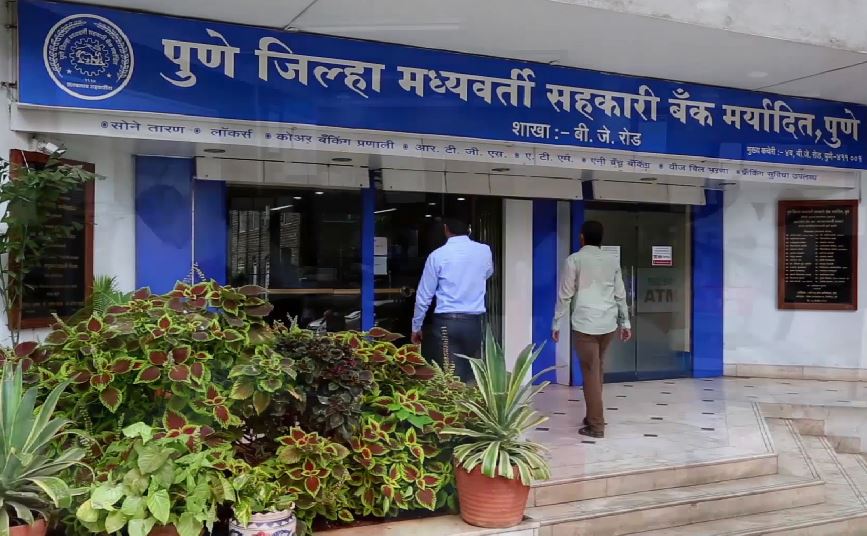
The bank has created network of 290 branches and 4 Extension Counter within the district with 135 ATMs.
The bank had started to provide training in various fields such as banking, Recovery, NPA Management, Computerization, Industrial finance, Management of available funds & its utilization, KYC, Liquidity management , Risk management & so on. It helps bank for its future progress.
The total strength of staff as on 31st March, 2026 was 1009 it is
| S.No | Designation | Staff as on 31.03.2026 |
|---|---|---|
| 1 | Chief Executive Officer | 1 |
| 2 | General Manager | 2 |
| 3 | Deputy General Manager | 6 |
| 4 | Asst.General Manager | 8 |
| 5 | Manager | 61 |
| 6 | Deputy Manager | 282 |
| 7 | Asst. Manager | 226 |
| 7 | Clerk | 335 |
| 8 | Peon,Driver etc. | 88 |
| Total | 1009 |
Driving Excellence Through Digital Transformation
At PDCC Bank, we are committed to providing seamless, efficient, and secure banking services. To ensure the highest levels of accuracy and real-time record management, we have implemented a state-of-the-art Core Banking System (CBS).
To support this infrastructure, we have established a dedicated department at our Head Office, ensuring continuous operational excellence. Furthermore, we prioritize your data security and service continuity by maintaining a robust, independent core banking disaster management system, guaranteeing that your banking experience remains uninterrupted, no matter the circumstances.
Immediate Payment Service is an interbank electronic instant mobile money transfer service through mobile phones. Our IMPS service helps you access your Bank Account and transfer funds instantly. The beneficiary account is credited immediately when a Fund Transfer request is made through your Mobile phone is an interbank electronic instant mobile money transfer service through mobile phones. Our IMPS service helps you access your Bank Account and transfer funds instantly. The beneficiary account is credited immediately when a Fund Transfer request is made through your Mobile phone ccount and transfer funds instantly.
| Number Of Branches | 17 |
| Number Of ATM | 17 |
| Branch Name | Branch Code | Branch Address | Current Location | Contact Number |
|---|

| ATM Name | ATM Address |
|---|
So instead of keeping that gold jewellery, coins, bars or biscuits lying ideal in your locker, you surely could use them to meet those cash contingencies.